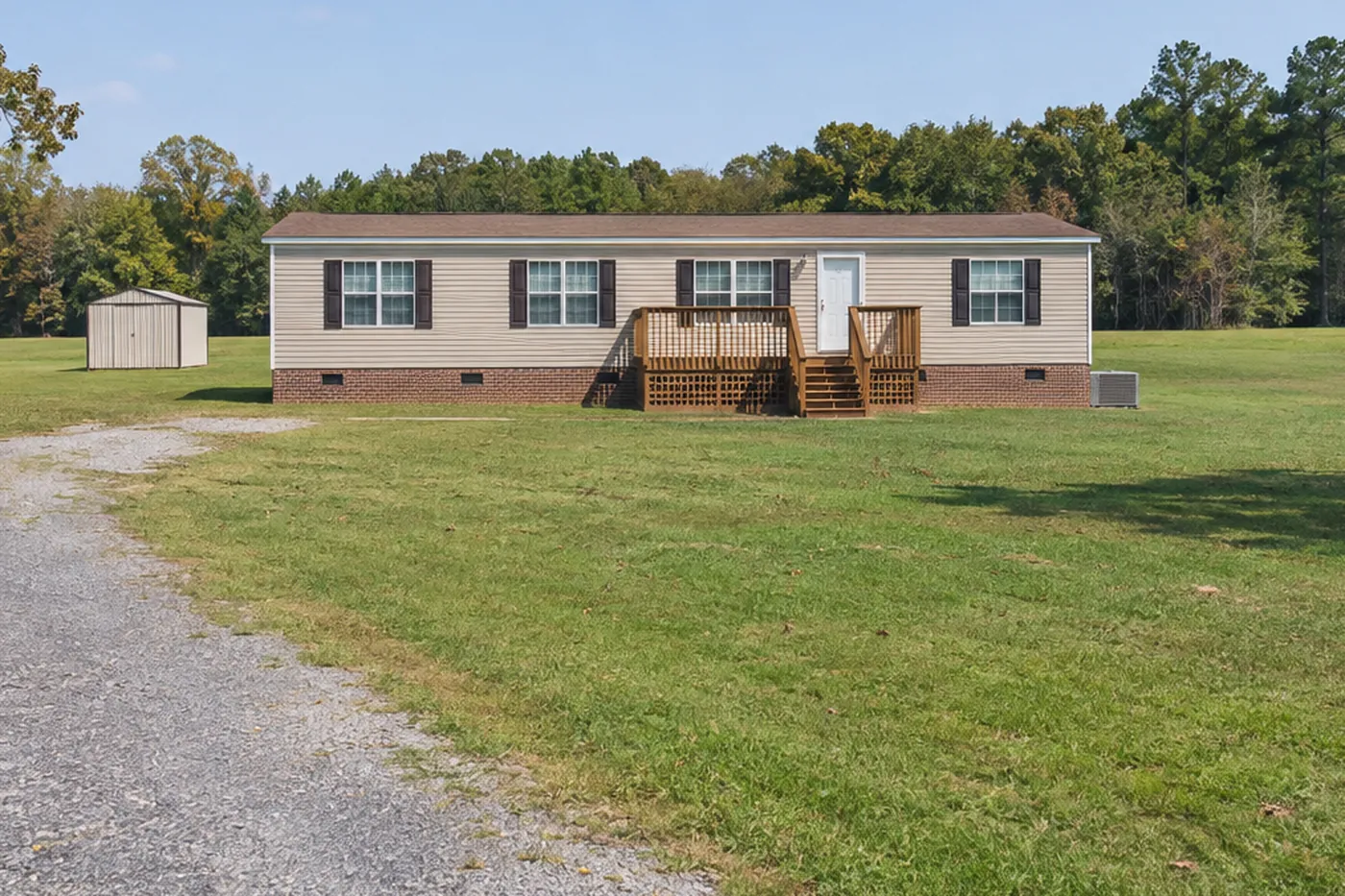
A mobile home sold with its land sells as real estate, usually through a title company, closing attorney or real estate agent. Mobile Home Buyer Finder passes on requests only for homes sold without land; requests that include land are outside the service. Start by checking the home's legal status and county records.
Key points
- Recorded conversion documents show the home's status
- Affixture: legal attachment of home to land
- Calculator covers the home alone, excluding land
A real-estate sale uses land records
A home sold with land uses a deed recorded with the county. Check conversion status before relying on a separate home title.
- Land deed and home ownership records
- Recorded conversion and title-status documents
- Title company, closing attorney or agent
Read more
State procedures connect the home to the real-property record in different ways. A foundation by itself does not show that all required records were completed. Check with the titling agency about the home's recorded status, and have the title company or closing attorney review the land and conversion records.
Texas, California, Arizona and Colorado use different records
Each state uses its own conversion records. A deed or old home title alone does not show the whole process.
- Texas: recorded certified Statement of Ownership
- California: recorded HCD foundation form
- Arizona affidavit and Colorado permanent-location certificate
Read more
Texas requires attachment to owned land or a qualifying leased site, lien resolution or consent, and an application for real-property status. Recording its certified Statement of Ownership completes conversion. California requires a foundation inspection and release of legal owners' interests. Recording HCD 433A makes the home a fixture improvement, a permanent part of the land.
Arizona requires title surrender and county recording for affixture. Requirements differ for owned and leased land. An affixed home sold with its land transfers by recorded deed. A separate home-only sale or move requires reversing that status and getting a title again.
Colorado's permanent-location process includes permanent attachment, surrender of ownership papers and title purging, which removes the home from the separate title system. A separate certificate covers qualifying long-term land leases. Future ownership transfers use a deed after that process.

Affidavits and title cancellation leave a paper trail
North Carolina, South Carolina, Georgia and Michigan require records beyond physical attachment. Look for the state paperwork and county recording that document the completed process.
- North Carolina: title surrendered, affidavit recorded
- South Carolina: affidavit recorded, title retired
- Georgia and Michigan: recorded title-cancellation documents
Read more
North Carolina uses an affidavit for an already titled home meeting the real-property definition. The process requires title surrender and secured parties' consent, followed by county recording. South Carolina requires installation standards, removal of wheels, axles and hitch, a recorded retirement affidavit and DMV title retirement. Its retired home sells with the land through a closing with a deed describing both.
Georgia uses Form T-234, the Mobile/Manufactured Home Certificate of Permanent Location. Owners and security-interest holders complete it and record it with the superior court clerk. The certified form and original title go through the county tag office for cancellation. At least one home owner must own the land; cancellation allows the affixed home and land to sell together on the deed.
Michigan requires a qualifying land interest, an affidavit of affixture, ownership documents and applicable lienholder consent. The Department of State cancels the title, and the approved affidavit is recorded with the register of deeds. Once the department receives the completed affidavit, the home can transfer only as part of the real property to which it is attached.
Alabama and Tennessee also require completed conversion records
Alabama's title-cancellation process and Tennessee's de-title process require ownership and installation records. Owning the ground and the home does not show that the paperwork is complete.
- Alabama: matching home and land owners
- Tennessee: recorded affidavit and matching ownership
- Separation can require another state process
Read more
Alabama's process covers model-year 2000 or newer homes with identical home and land ownership. Alabama also requires permanent installation with the tongue, axles and wheels removed. Its cancellation package includes titles, lien releases and certification of recorded real-property status. Those requirements describe the cancellation process, not a conclusion based only on the home's age or appearance.
Tennessee's de-title process, which removes the separate home title, requires a request letter, title or origin document, certified deed and certified recorded Affidavit of Affixation. The home and land must share the same ownership. An affixed home's ownership is recorded in real-property records. A later sale without the land may require a title to be issued again.
Use the guides for the next paperwork question
The title-transfer and realtor guides explain ownership records and real-estate sales. The calculator gives a rough home-only range that excludes land.
- Title-transfer guide for home records versus deeds
- Realtor guide for home-and-land sales
- Calculator for a rough home-only starting point
Read more
A combined home-and-land price needs the land and real-estate records assessed as well. The calculator's Census starting prices and our age and condition factors do not value a parcel. Its result is not an appraisal or an offer for the property.